
 Gastroesophageal Reflux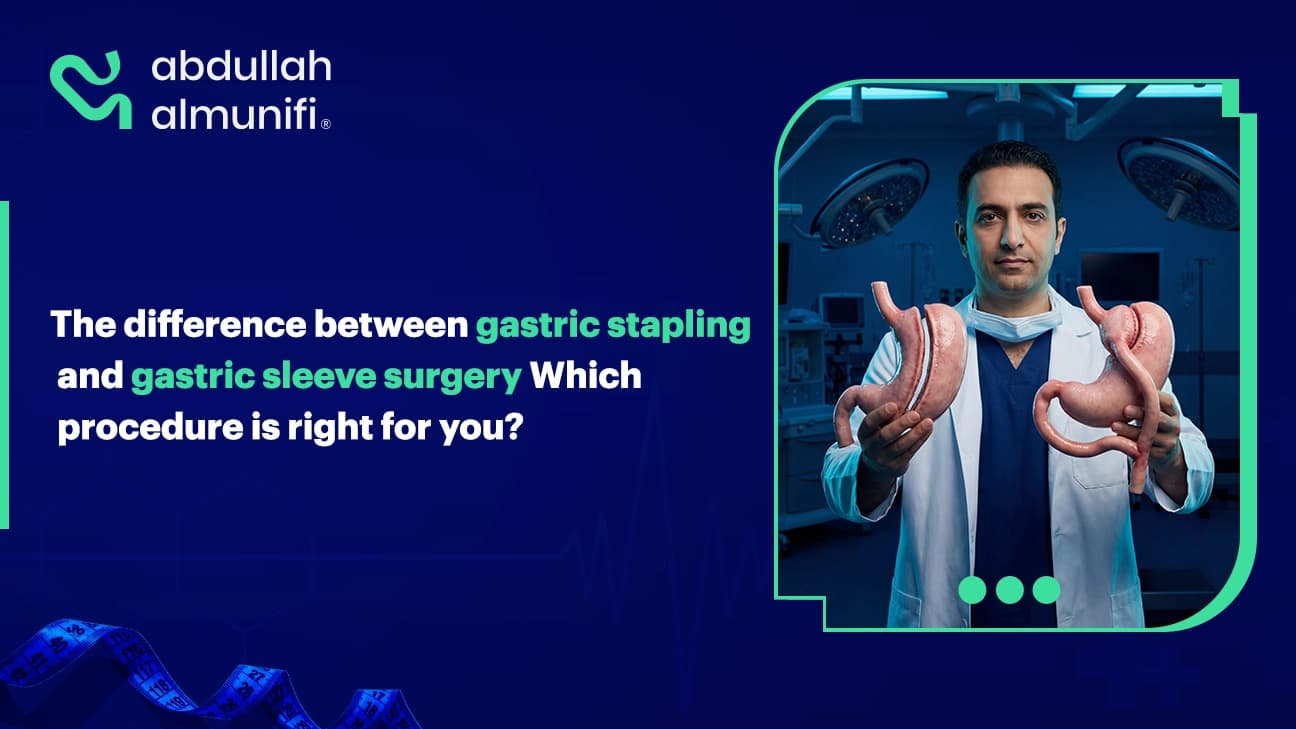
When a person decides to undergo bariatric surgery, they are presented with several options that appear similar on the surface, but are in fact fundamentally different. The difference between gastric banding and gastric sleeve surgery is one of the most frequently asked questions by patients before making their decision, and it deserves a clear and detailed answer, free from intimidating medical complexities.
On this page, we present the real differences between the two procedures in a direct and honest manner, drawing on the expertise of Dr. Abdullah Al-Munifi, a specialist in bariatric and laparoscopic surgery, to help you reach the most suitable decision for your case and understand the difference between gastric banding and gastric sleeve surgery in a way that empowers you to make the right choice.
On this page, we present the real differences between the two procedures in a direct and honest manner, drawing on the expertise of Dr. Abdullah Al-Munifi, a specialist in bariatric and laparoscopic surgery, to help you reach the most suitable decision for your case and understand the difference between gastric banding and gastric sleeve surgery in a way that empowers you to make the right choice.
What is gastric stapling surgery?
Gastric bypass surgery—or gastric banding—is a surgical procedure that goes beyond simply reducing stomach size. The basic idea is to create a very small stomach pouch at the top of the stomach and then connect it directly to a portion of the small intestine, bypassing the larger part of the stomach and part of the intestine. This surgical modification has a dual effect: reducing the amount of food that can be consumed and decreasing its absorption. For this reason, it is often considered one of the most effective surgical procedures for treating morbid obesity.
What's noteworthy here is that the word "stapling" refers to the surgical stapler technique used in this procedure—instruments that precisely close and connect tissues. The new stomach created by the surgeon is no larger than a walnut in the early stages of recovery. This means the patient feels full after eating very small amounts of food, and much more quickly than before the operation.

How is gastric stapling performed?
- The patient is placed under general anesthesia at the start of the procedure, which typically lasts between one and two hours depending on the technique used.
- The surgeon makes several small incisions in the abdomen (usually four to five) to insert the surgical instruments, reducing the size of the incision compared to open surgery.
- The surgeon staples the upper part of the stomach to create a small pouch with a limited capacity, usually no more than 30 ml.
- A section of the small intestine is cut and connected directly to the new gastric pouch, a procedure known as gastric bypass or gastric bypass surgery.
- The remaining part of the small intestine is reconnected to a point further away to ensure the digestive system continues to function properly despite the change in its path.
- After confirming that all connections are secure, the surgeon closes the incisions, and the patient is transferred to the recovery room.
The difference between gastric stapling and gastric sleeve surgery
Before delving into the details, remember that the goal of both procedures is the same: to help you lose excess weight and improve your quality of life. However, the paths they take are completely different, and this difference is what determines which is best for your specific situation. Therefore, understanding the difference between gastric banding and gastric sleeve surgery is an essential step before deciding to undergo either surgical procedure.
In terms of the nature of the procedure
Gastric sleeve surgery is a simpler procedure—the surgeon removes approximately 75 to 80 percent of the stomach lengthwise, leaving a tube-like or sleeve-like shape. The intestinal pathways are not altered, and no additional connections are made. The digestive system continues to function normally, but with a significantly reduced capacity.
Gastric banding or gastric bypass surgery, on the other hand, is a more extensive and complex procedure. The surgeon not only reduces the size of the stomach but also fundamentally redesigns the digestive tract. This makes it a more invasive surgical option, requiring greater expertise and precision from the surgical team. Herein lies the clear difference between gastric banding and gastric sleeve surgery in terms of their impact on the digestive system and absorption mechanisms.
In terms of advantages and benefits
Sleeve gastrectomy is a less technically complex procedure and offers excellent weight loss results for the majority of patients. Recovery time is relatively shorter, and it doesn't require the same level of long-term nutritional supplementation as gastric banding.
In fact, gastric banding is superior in certain cases—specifically, for patients with severe obesity or those with severe type 2 diabetes. Gastric bypass surgery improves blood sugar levels through hormonal means that go beyond mere weight loss, making it a crucial option for a specific group of patients. Understanding the difference between gastric banding and sleeve gastrectomy helps both the patient and their doctor choose the most appropriate procedure based on their individual health condition.
In terms of damages:
Every surgical procedure has its costs, a fact no patient should forget. Gastric sleeve surgery can lead to gastroesophageal reflux disease (GERD) in some patients, especially those who suffered from it before the operation. Additionally, leakage from the stapling line that closes the removed portion is a significant risk requiring close monitoring.
Conversely, total gastric bypass surgery carries a higher risk of long-term vitamin and mineral deficiencies due to the bypassing of a portion of the small intestine responsible for absorbing certain nutrients. This means the patient will need regular nutritional supplements and periodic medical follow-up after the procedure. This is one of the most important differences between gastric stapling and gastric sleeve surgery that should be considered before making the decision.
In terms of complications
Complications in both procedures are rare when performed by an experienced surgeon. However, gastric stapling—being more complex—carries a slightly higher risk of certain technical complications, such as leakage at the connection points or, in the long term, bowel obstruction. As for gastric sleeve surgery, its most prominent complications revolve around the longitudinal stapling line and the possibility of the remaining stomach expanding over the years if dietary instructions are not followed.
Have you ever wondered why some doctors choose one procedure over another for the same patient? The answer lies in a comprehensive evaluation of each patient's individual case, not in a fixed formula that applies to everyone. This makes understanding the difference between gastric stapling and gastric sleeve surgery essential for any patient considering bariatric surgery.
In terms of results
Both procedures result in significant weight loss. Gastric sleeve surgery helps patients lose between 60 and 70 percent of their excess weight within the first year. Gastric banding combined with gastric bypass results in 70 to 80 percent weight loss in the same timeframe, with the added benefit of improved blood sugar, blood pressure, and cholesterol levels.
In some long-term studies, gastric banding offers more lasting results, but adherence to a healthy diet and lifestyle remains the most important factor in maintaining the results—regardless of the specific procedure. Therefore, understanding the difference between gastric banding and gastric sleeve surgery extends beyond the surgical technique to include long-term outcomes and post-operative lifestyle changes.

About Dr. Abdullah Al-Munifi
Dr. Abdullah Al-Munifi is a bariatric and laparoscopic surgeon with extensive experience in performing sleeve gastrectomy, gastric banding, and gastric bypass surgeries using modern laparoscopic techniques that minimize pain and accelerate recovery. His approach is distinguished by a meticulous evaluation of each individual case. He doesn't apply a one-size-fits-all approach but rather selects the most suitable procedure based on each patient's overall health profile.
Dr. Al-Munifi is committed to building a genuine relationship of trust with his patients, starting from the initial consultation and continuing after surgery. His medical team accompanies the patient throughout their entire journey—from pre-operative assessment to post-operative nutritional and psychological support. This ongoing support is what transforms the results of the surgery from mere numbers on the scale into a true transformation in quality of life.